
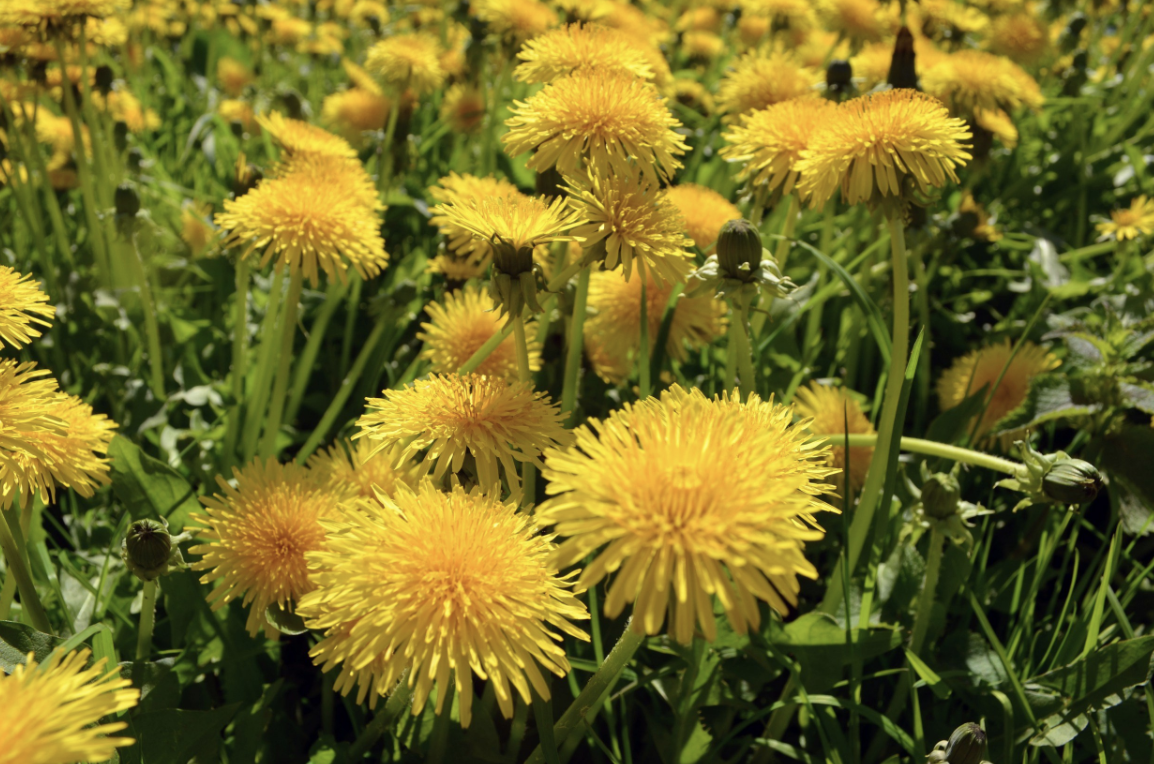
Who said dandelion is a weed ? Well it is, but this humble, hardy perennial plant is full of natural goodness and cooking potential. Various parts of dandelion can be used in cooking: flower heads, leaves, roots. Young leaves are used in salads, soups or added to meat and fish dishes. Flower heads make the most delicious of jams, whereas dandelion roots are used as a caffeine-free substitute for coffee.
No other green vegetables can be compared to dandelion in terms of iron salts, phosphorus or calcium content!
Now that the flowers are in abandon, I’d like to share a simple delicious recipe with you. Go out for a walk to your local park (or even check your back garden) and come back with some flowers so you can make this:
Dandelion jam
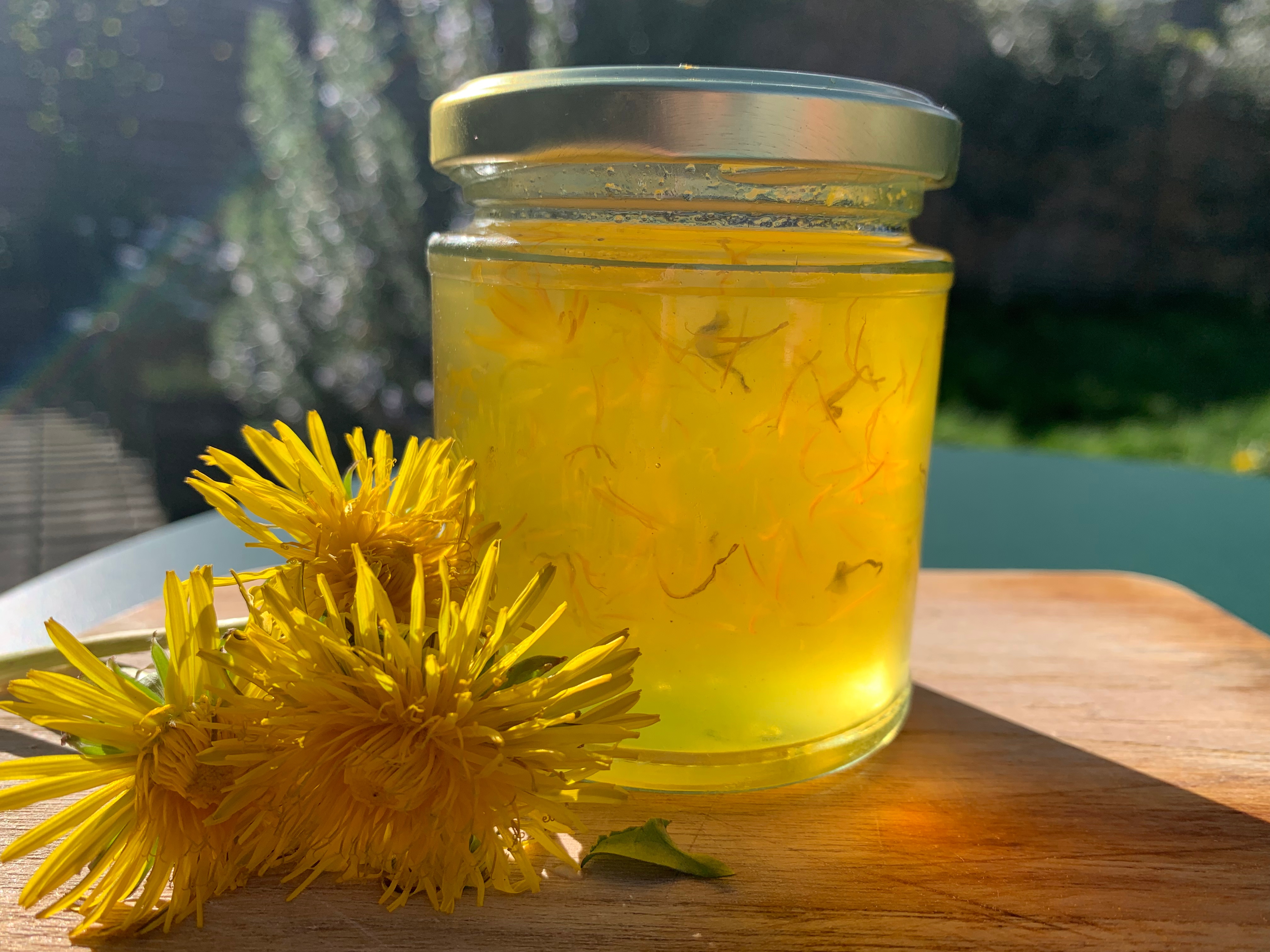
Unlike other jams dandelion jam is virtually unknown and a rarely cooked preserve. You won’t find it among your usual jams on a supermarket shelf. Yet, it is extremely tasty, has a distinguished fresh, spring honey like flavour which is easy to capture and keep in a jar for you to enjoy whole year round.
You will need:
300 dandelion flower heads (washed thoroughly in cold water), 1 kg of sugar, 2 glasses of water, juice of half a lemon, 20g of pectin for the jam to set.
The process:
Wash the flower heads thoroughly in cold water. Mix water with sugar and bring it to boil. Add the flower heads into the syrup. Allow it to boil and leave to simmer for 20 min. 2-3 min before it is ready add the lemon juice. Remove the pot from heat and allow to stand for 24 hours. The mixture is filtered through and the flower heads are removed. Cook for another 20 min. Add pectin towards the end for the jam to set. You might want to leave some of the flower heads in the mix as they are perfectly edible and look great in the mixture. The final product has a clear honey-like look and tastes fantastic!



 Wild About Food
Leave a comment